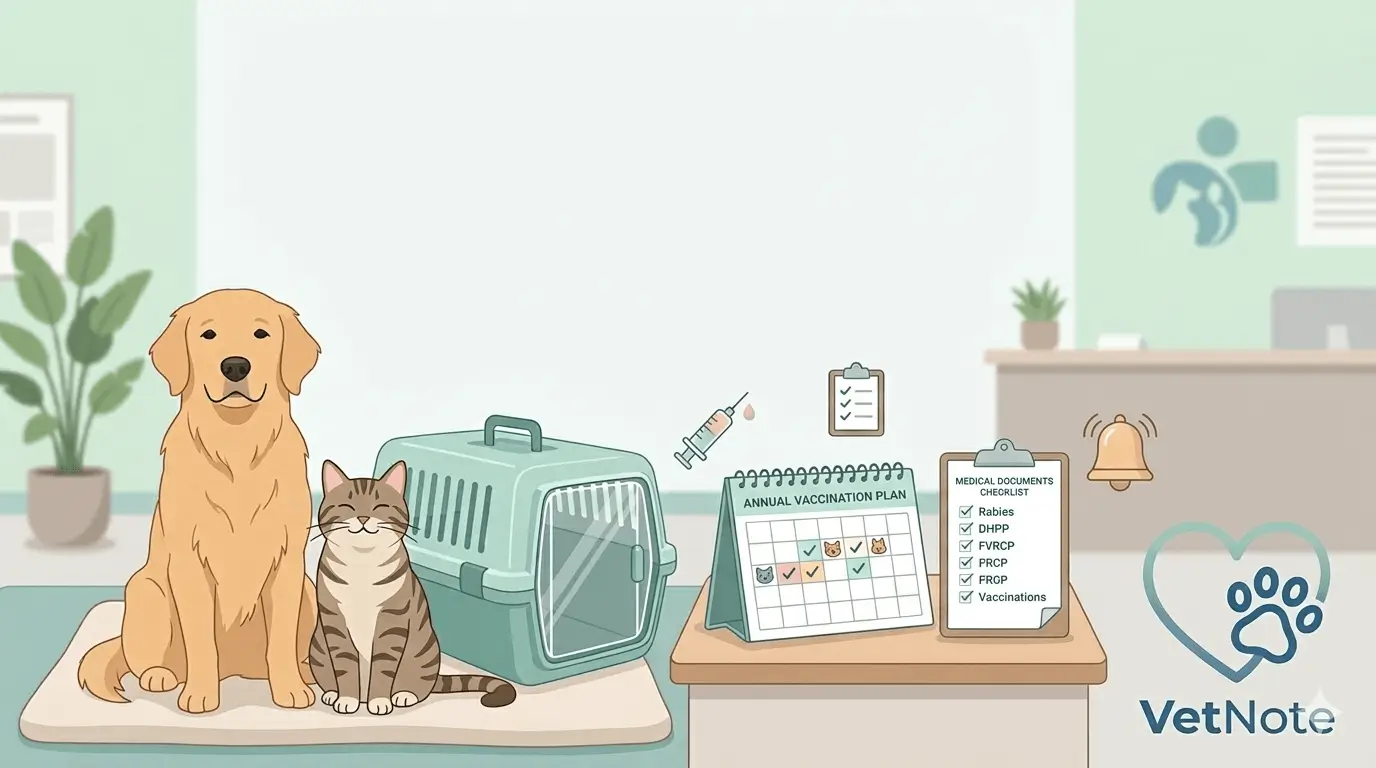
For a first vet appointment, bring four things: core pet details, a symptom timeline, previous records, and a short question list. That usually gives your veterinarian enough context for faster and more accurate next steps.
You do not need perfect documentation. You need clear information your vet can use immediately.
Quick answer: first vet visit checklist
Bring at least:
- age and current weight,
- symptom notes with dates,
- previous test results and medication list,
- 3-5 questions you want answered.
1. Prepare core pet details
Your vet will usually ask for:
- age,
- breed or type,
- current weight,
- diet,
- activity level.
Write these down in one place to avoid searching during the appointment.
2. Build a short symptom timeline
If the visit is problem-focused, prepare:
- when symptoms started,
- how often they appear,
- what makes them better or worse,
- what treatments were already tried.
Specific timelines help your vet narrow causes more quickly.
3. Bring previous medical records
Even one blood test result or treatment note can matter. Before the visit, collect:
- previous diagnoses,
- lab results,
- current medications and supplements,
- known allergies or adverse reactions.
This often prevents repeated tests and saves time.
4. Write questions in advance
A short question list reduces the chance of forgetting important issues after the appointment. For example:
- which follow-up tests are recommended,
- which warning signs require urgent action,
- when a control visit should happen.
Frequently asked questions
Do I need to bring every old document?
Not always, but bring the latest and most relevant records. Recent test results, diagnoses, and medication history are the highest priority.
What if my records are incomplete?
Bring what you have. Partial history is still useful and helps your vet decide the safest next steps.
Is it useful to record symptoms on video?
Yes. Short videos can be very helpful when symptoms are intermittent and hard to describe in real time.
Sources
Summary
A good first appointment is mostly about preparation, not luck. Clear notes, key records, and a focused question list reduce stress and make clinical decisions easier for both sides.