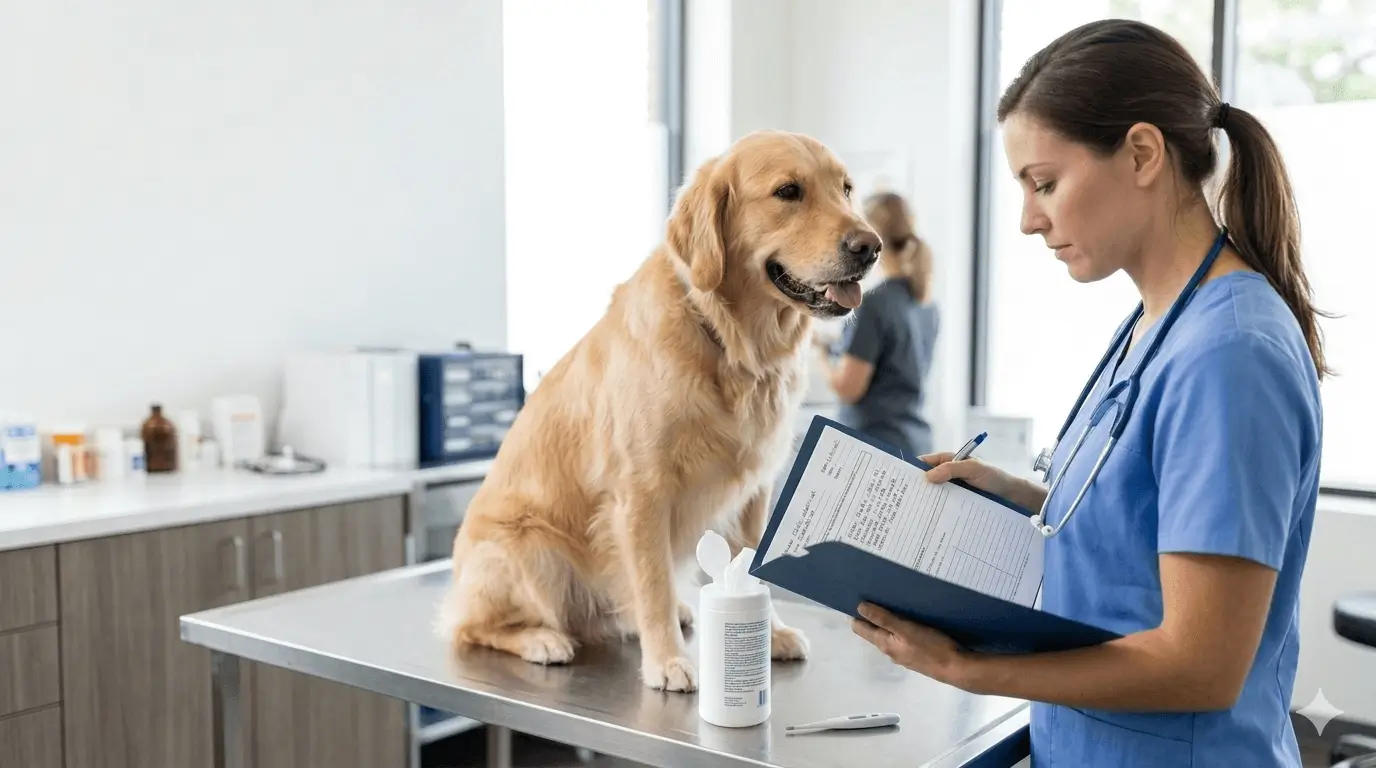
The simplest dog treatment history is one dog health card updated right after each appointment. If you consistently log visit date, symptoms, tests, medications, and recommendations, your dog medical records become useful clinical context instead of scattered notes.
You do not need a complex system. A consistent format plus five minutes after each visit is enough.
Quick answer: how to keep a dog’s treatment history
Use one template and repeat it every time:
- add visit date and reason for consultation,
- log diagnosis and completed tests,
- record medication doses and duration,
- include follow-up plan and next visit date,
- keep everything in one dog health card.
1. Choose one place for dog medical records
Most confusion comes from fragmented information across paper notes, clinic messages, and phone reminders. Pick one system and treat it as your single source of truth.
Your dog health card should include:
- dog identity details (age, weight, microchip number),
- allergies and adverse reactions,
- chronic conditions (if present),
- a dedicated section for each visit and treatment plan.
This single decision saves time in every future consultation.
2. Record the same core details after every visit
Consistency matters more than long notes. Each entry in your dog treatment history should include:
- visit date and clinic name,
- reported symptoms,
- exam findings or test results,
- working or final diagnosis,
- treatment plan (drug, dose, frequency, duration),
- control visit date.
When entries follow the same structure, trends and gaps become visible quickly.
3. Add a short symptom timeline between visits
Good dog medical records include home observations, not only clinic events. A short timeline helps your vet connect patterns:
- first day the symptom appeared,
- how often it happens,
- whether it gets worse at specific times,
- what improves or worsens the condition.
Two short lines per day can be more useful than a general memory-based summary.
4. Keep medication and supplement list current
A common mistake is updating medications days later, when details are already blurred. A safer workflow:
- log product name right after giving or buying it,
- record dose and administration schedule,
- note any side effects,
- mark treatment as completed after the final dose.
This reduces medication errors during future treatment changes.
5. Do a monthly 10-minute review
Once a month, run a quick quality check:
- are all visits listed in correct order,
- does your dog treatment history include all test reports,
- is the medication list up to date,
- are follow-up dates added to your calendar.
This habit keeps records ready at all times, not only when an urgent visit appears.
Frequently asked questions
Can I keep a dog health card only on my phone?
Yes. The key is completeness and quick access during appointments. Digital-only records are fine if updates are regular.
What should I log if diagnosis is not final yet?
Write the working diagnosis, completed tests, and next diagnostic step. Mark the entry as pending confirmation.
How long should I keep dog medical records?
Ideally for the dog’s entire life. Older episodes can still matter for chronic diseases, allergies, and recurring symptoms.
Sources
- AAHA - For Pet Parents
- FECAVA - Animal Welfare and Owner Education Resources
- WSAVA - Global Guidelines
Related articles
Summary
A dog treatment history works best when it is simple and consistent. One dog health card, one fixed entry template, and one monthly review are usually enough to keep dog medical records clear, useful, and ready for clinical decisions.